
Raw, live, pasteurised, HPP & “with the mother”: food labels explained
- Tara Scott
- Dec 18, 2025
- 4 min read
We were out at a meal recently when someone picked up a bottle of Big Shot, started reading the label, and asked a simple question:
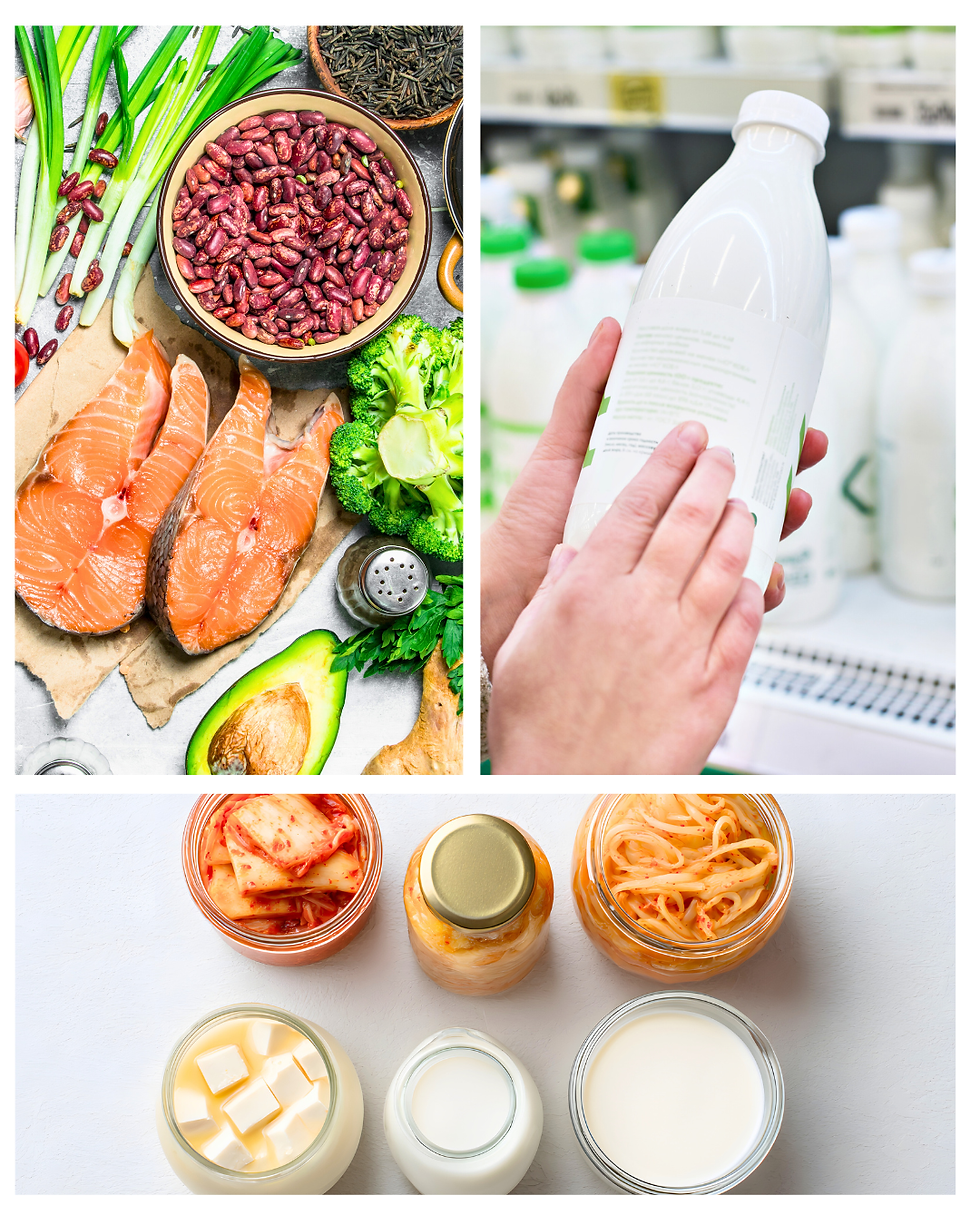
“What does it actually mean when apple cider vinegar says ‘with the mother’?”
It was a great reminder of how confusing food label jargon can be — especially when you’re just trying to make informed choices in a busy, modern world.
So here’s a plain-English, overview of some of the most common terms you’ll see on food and drink labels — what they mean, where you’ll typically see them, and how they fit into health and wellbeing.
Pasteurised – what it means
What it is: Pasteurisation is a heat process used to kill bacteria and extend shelf life.
Where you’ll see it:
Milk and dairy
Fruit juices
Soups and sauces
Many shelf-stable drinks
Where it’s beneficial:
Food safety
Long shelf life
Products that need stability and consistency
Pasteurised foods play an important role in the food system, particularly where safety and longevity are priorities. From a microbiome perspective, however, they’re generally inactive, as heat removes both harmful and beneficial bacteria.
Raw – what it means
What it is: A food or drink that hasn’t been heated above a certain temperature.
Where you’ll see it:
Fresh fruit and vegetables
Cold-pressed juices
Raw vinegars and oils
Minimally processed foods
Where it’s beneficial:
Preserving natural structure and nutrients
Maintaining flavour and integrity
Avoiding heat-related degradation
Raw doesn’t automatically mean live. A product can be raw but still contain no active bacteria. Think of “raw” as a marker of gentle handling, rather than microbial activity.
Live foods – what it means
What it is: Foods that contain living bacteria at the point you consume them.
Where you’ll see it:
Fermented vegetables
Live yoghurts and kefir
Raw, unfiltered vinegars
Some fermented drinks
Where it’s beneficial:
Adding diversity to the diet
Supporting the gut environment
Reintroducing living food into modern diets
Live foods are often discussed in the context of digestion and overall wellbeing because they contribute something many modern diets lack: living, biologically active food.
Fermented foods – what it means
What it is: A natural process where bacteria break down sugars and other compounds in food.
Where you’ll see it:
Sauerkraut, kimchi and pickles
Fermented drinks
Vinegars
Traditionally prepared foods
Where it’s beneficial:
Making nutrients more bioavailable
Producing organic acids and beneficial compounds
Supporting digestion and food tolerance
Fermentation has been part of traditional diets across cultures for thousands of years — long before refrigeration or modern processing. Not all fermented foods remain live by the time you eat them, depending on how they’re handled after fermentation.
“With the mother” (apple cider vinegar)
What it is: The “mother” is the cloudy substance formed during fermentation, made up of naturally occurring bacteria, yeasts, proteins and enzymes.
Where you’ll see it:
Raw, unfiltered apple cider vinegar
Traditionally produced vinegars
Where it’s beneficial:
Indicates minimal processing
Keeps the vinegar closer to its fermented form
Maintains the complexity created during fermentation
Filtered or pasteurised vinegars remove the mother. Neither option is inherently right or wrong — they simply offer different characteristics and uses.
What is HPP (High Pressure Processing)?
You’ll see this on many modern juice and wellness shots.
What it is: HPP (High Pressure Processing) uses extremely high pressure (rather than heat) to inactivate microorganisms and extend shelf life.
Where you’ll see it:
Cold-pressed juice shots
Wellness and “functional” drinks
Products designed for wide distribution
Where it’s beneficial:
Extending shelf life without heat
Preserving colour and flavour
Supporting convenience and availability
What’s important to understand: HPP inactivates the vast majority of bacteria — including beneficial ones. While tiny numbers of pressure-resistant spores may technically survive, HPP-treated products are considered microbiologically inactive in practical terms.
This means that although these products may look and taste fresh, they are not live foods and do not provide active cultures in the way fermented foods do. The process also requires plastic bottles to withstand the pressure.
Fresh-tasting doesn’t always mean biologically active.
How to make sense of it all - food labels explained
Rather than thinking in terms of good vs bad, it can help to ask a few simple questions:
Is this product designed for convenience and shelf life, or for freshness and function?
Has it been heavily processed, or handled gently?
Am I looking for nourishment, stability, or both — at different times?
Understanding labels helps people make informed choices — not perfect ones — based on what fits their lifestyle and priorities.
Where Big Shot fits
Big Shot is:
Cold-pressed
Wild-fermented
Not heat-pasteurised
Not HPP-treated
It’s designed as a concentrated, live, fermented microgreen shot, intended to complement everyday eating rather than replace it.
In a market dominated by shelf-stable, heavily processed shots, we’ve chosen a different approach — one that prioritises minimal processing, living food, and functional nutrition.
Why understanding labels matters
Modern diets tend to be:
Highly processed
Shelf-stable
Microbiologically inactive
Learning what these labels actually mean empowers people to choose foods that better support how they want to feel — without chasing trends or extremes.
Sometimes, simply understanding the label is the first small, smart step.
Curious about minimally processed, fermented microgreens? You can learn more about Big Shot here.


